Solar panels in Tonbridge and Malling
Solar panels in Tonbridge and Malling: 2026 costs, savings by roof direction, conservation area and Green Belt rules, grants and free local installer quotes.
4 kW
Typical home system (9 panels)
£6,500 to £7,400
Estimated installed cost, panels only
4,200 kWh
Estimated yearly generation, south-facing roof
£655 a year
Estimated bill saving plus export income (£805 with a battery)
Estimates for Tonbridge and Malling from our calculator assumptions. Your figures depend on your roof, usage and tariff.
Get up to 3 quotes from MCS-certified installers
Free, no obligation, takes about a minute.
Thanks, you're all set
An installer will be in touch, usually within 2 working days.
Covers Tonbridge, West Malling, Kings Hill, Snodland, Aylesford and surrounding villages.
Solar panels in Tonbridge and Malling typically cost £6,500 to £7,400 for a 4 kW system and earn back around £660 a year on a south-facing roof, counting both bill savings and export payments. That works out at a payback of about 10 to 11 years. EU PVGIS data gives Tonbridge 1,061 kWh of electricity per kW of panels a year, about 14% more than the UK average, which puts the borough level with Maidstone and Tunbridge Wells.
Most homes here won’t need planning permission, but the borough has more than 50 conservation areas, a lot of Green Belt and a slice of the Kent Downs, so it’s worth knowing which rules apply to your street before an installer visits. This page covers costs by roof direction, monthly output, the local planning position, grants, and what to expect in Tonbridge, West Malling, Kings Hill, Snodland, Aylesford and the villages.
Solar panel costs and savings in Tonbridge
These figures assume a three-bedroom home using 2,500 kWh of electricity a year (Ofgem’s typical medium use), paying the October to December 2026 Ofgem price cap rate of 26.32p per kWh, and exporting spare power at 12p per kWh, the rate several large suppliers paid their own customers when MoneySavingExpert checked on 9 November 2026. We’ve assumed you use about a quarter of what the panels make without a battery, and around half with one.
| System | Installed cost | Yearly output | Yearly benefit | Payback |
|---|---|---|---|---|
| 4 kW, south-facing | £6,500 to £7,400 | about 4,240 kWh | about £660 | 10 to 11 years |
| 4 kW, south-east or south-west | £6,500 to £7,400 | about 3,990 kWh | about £620 | 11 to 12 years |
| 4 kW, east or west-facing | £6,500 to £7,400 | about 3,350 kWh | about £520 | 13 to 14 years |
| 4 kW, south-facing, plus 5 kWh battery | £9,000 to £11,400 | about 4,240 kWh | about £810 | 11 to 14 years |
| 6 kW, south-facing, 4+ bedroom home | £9,850 to £10,350 | about 6,370 kWh | about £990 | about 10 years |
Installed costs come from the Department for Energy Security and Net Zero’s 2025/26 solar PV cost data for MCS-certified installations, using South East prices (published 28 May 2026). Battery prices are from Which? (30 October 2026). The 6 kW row assumes a four-bedroom home using 3,800 kWh a year.
Three things move these numbers more than anything else:
- Roof direction. An east or west roof makes about 21% less than a south roof in PVGIS modelling for this part of Kent. It still pays back, just more slowly. Many Tonbridge semis have an east and a west slope, and splitting panels across both can suit a household that uses power morning and evening.
- How much you use at home. Every unit you use yourself saves 26.32p; every unit you export earns about 12p. Working from home, running a dishwasher at midday or charging an electric car in daylight all improve the return.
- Your export tariff. Standalone Smart Export Guarantee tariffs pay as little as 2p to 6p. Check what your own supplier offers before you sign anything.
0% VAT applies to installed panels and batteries in homes until 31 March 2027, after which it’s due to rise to 5% (HMRC). Try your own roof in our solar calculator, or read our UK solar panel cost guide and solar and battery cost guide.
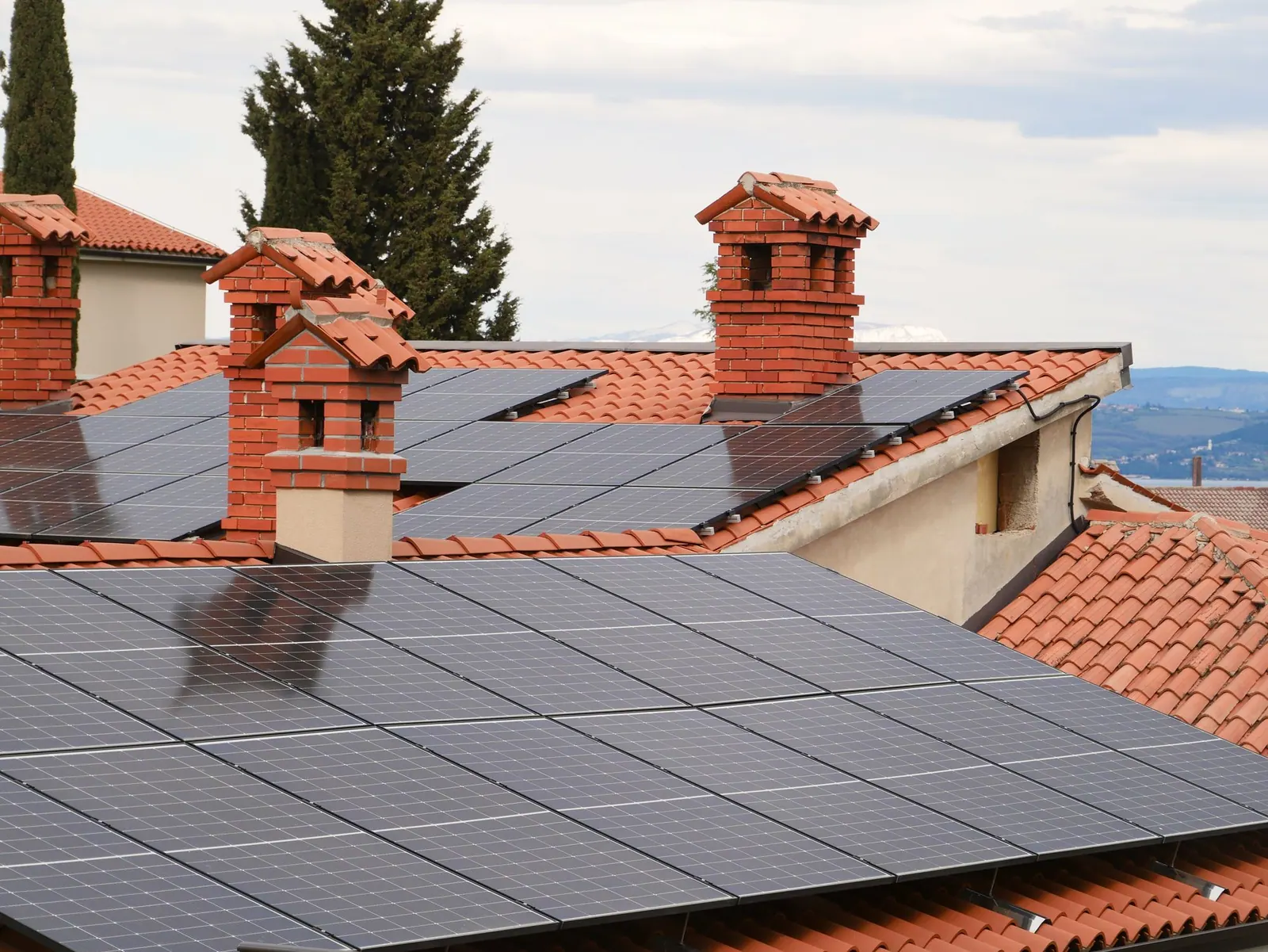
How much electricity solar panels make in Tonbridge
PVGIS 5.3 figures for a 4 kW south-facing system in Tonbridge, angled at 35 degrees, with 14% system losses:
| Month | Output | Month | Output |
|---|---|---|---|
| January | 158 kWh | July | 519 kWh |
| February | 214 kWh | August | 466 kWh |
| March | 354 kWh | September | 403 kWh |
| April | 482 kWh | October | 284 kWh |
| May | 506 kWh | November | 194 kWh |
| June | 517 kWh | December | 146 kWh |
June and July produce about three and a half times as much as December. From April to September a 4 kW system will usually cover a typical home’s daytime use with power left to export or store. In December you’ll make around 5 kWh on an average day, which trims the bill rather than clearing it.
Tonbridge sits in the Medway valley on the edge of the Weald, slightly inland from the sunnier north Kent coast, so it makes a little less than Faversham (1,087 kWh per kW) but more than Sevenoaks (1,048 kWh per kW). The differences are small. On any single house, shading from trees, chimneys and neighbouring roofs matters far more than which side of the borough you live in.
Planning permission for solar panels in Tonbridge and Malling
Planning questions go to Tonbridge and Malling Borough Council. For most homes the answer is simple: rooftop solar on a house is permitted development in England. On a pitched roof the panels mustn’t project more than 20 cm from the roof surface or rise above the highest part of the roof, and they should be sited to reduce their visual effect as far as practical. Flat-roof panels have their own limits and, in some protected areas, need prior approval.
Conservation areas
The council says many parts of the borough are conservation areas, and its own documents show just how many. It publishes conservation area appraisals for 16 areas, including Tonbridge, West Malling, Snodland, Hildenborough, East Malling village, Ditton, Hadlow, Mill Street and Quarry Hill. It also publishes older conservation area statements for 43 more, among them Aylesford, Wrotham, Ightham, Plaxtol, Offham, Wateringbury, Mereworth and Trottiscliffe. You can check your address on the council’s conservation area map, linked from its planning pages.
West Malling’s conservation area was designated in 1971 and extended in 1990 and 1993, according to the council.
What a conservation area means for solar:
- Roof panels are still usually permitted development, within the 20 cm and ridge limits above.
- Panels can’t go on a wall that faces a road without planning permission.
- The council notes that permitted development rights are more limited in conservation areas generally, and it recommends its pre-application advice service if you’re planning changes.
A sensible approach in a conservation area is to use the rear roof slope where you can, choose all-black panels and frames, and keep the array set in from the roof edges.
Article 4 directions
We didn’t find a Tonbridge and Malling Article 4 direction that removes permitted development rights for roof alterations or solar panels. The council’s recent Article 4 work, discussed at committee in 2026, concerns small houses in multiple occupation, which has no bearing on panels. If you live in a conservation area, ask your installer to confirm with the council anyway, because directions can be made at any time.
Listed buildings
Panels on a listed house need listed building consent, whether or not planning permission is also needed. Tonbridge and Malling has plenty of listed properties in its old village centres, especially in West Malling, Aylesford, Wrotham and the smaller villages. If your home is listed, panels on a garage or outbuilding, a ground mount in the garden, or a plug-in kit may be easier.
Green Belt and the Kent Downs
Nearly three quarters of the borough, 71%, lies in the Metropolitan Green Belt, according to the council’s 2016 Green Belt study (citing government statistics from March 2014). That sounds restrictive, but Green Belt rules control new building on open land. They don’t stop you fitting panels to the roof of an existing house. A large ground-mounted array in a Green Belt field or paddock is a different matter and may need a planning application.
The north of the borough, along the chalk scarp above Wrotham, Trottiscliffe and Burham, is in the Kent Downs National Landscape, and the council’s draft Local Plan also takes in part of the High Weald to the south. Rooftop panels are still normally allowed in a National Landscape. The Kent Downs team’s Renewable Energy Position Statement (June 2026) says it encourages rooftop solar, including retrofitting, and prefers it to ground-mounted panels. For any small ground mount it asks for evidence that a roof or wall was considered first, plus non-reflective, recessive colours.
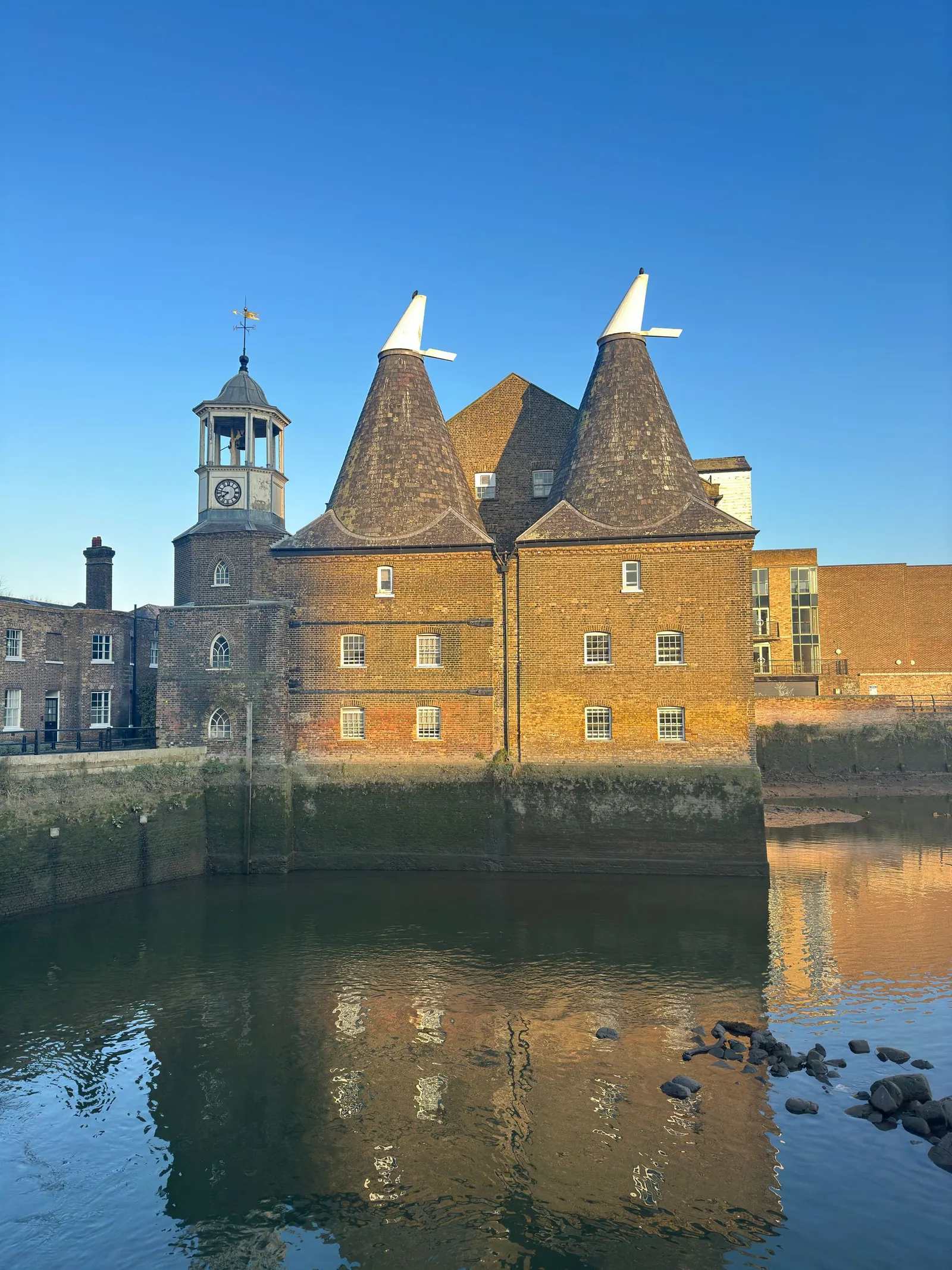
Tonbridge and Malling homes and roofs
The borough has a wide spread of housing, and the type of roof you have shapes the job more than the postcode.
| Area | Typical homes | What it means for solar |
|---|---|---|
| Tonbridge and Hildenborough | Victorian and Edwardian terraces near the station and High Street, 1930s semis, post-war estates | Terrace rear slopes may take 6 to 8 panels. Semis often have east and west slopes. |
| West Malling | Historic town centre in a conservation area, newer estates around it | Use rear slopes in the centre. Check listed status first. |
| Kings Hill | Large newer development on the former RAF West Malling airfield, mostly built since the 1990s | Modern concrete tile roofs and simple layouts make for quick, cheaper installs. Bigger homes suit 5 to 6 kW. |
| Snodland | Victorian terraces from its industrial past, plus large modern estates | Older terraces have small roofs. New estates often have clear, unshaded slopes. |
| Aylesford, Larkfield and Ditton | Historic village core by the Medway, large post-war and modern estates around it | Aylesford village is a conservation area. Most estate homes are straightforward. |
| Borough Green, Wrotham and the villages | Older cottages, oast conversions, detached rural homes | Often in conservation areas or near the Kent Downs. Roomy roofs and gardens suit ground mounts. |
A few practical points apply across the borough:
- Clay and concrete tiles. Mounting hooks are fitted by lifting tiles. On older clay or peg tile roofs, ask how the installer will protect them and whether they’ll replace any breakages with matching tiles.
- Newer homes. Some homes built in Kings Hill and elsewhere since the 2010s already have a small array. You can often add panels to spare roof space or add a battery, but the existing inverter may limit how far you can go.
- Shade. Mature trees are common in Hildenborough, Tonbridge’s south side and the villages. Partly shaded arrays benefit from optimisers or microinverters, which stop one shaded panel dragging the rest down.
Solar grants and help in Tonbridge and Malling
- Warm Homes: Local Grant. Tonbridge and Malling isn’t on the government’s list of councils allocated funding for 2025 to 2028, either on its own or as a consortium member, when we checked on 24 November 2026. Its neighbours Sevenoaks, Tunbridge Wells and Medway are on it. If that changes, it will show on gov.uk.
- ECO4. Households on qualifying benefits or low incomes, in homes rated EPC D to G, may get solar funded through an energy supplier until ECO4 closes on 31 December 2026.
- 0% VAT on installed panels and batteries until 31 March 2027.
- Switch Together Kent. The council-backed group-buying scheme, formerly Solar Together, covers every Kent district. The 2026 round has closed. See our Switch Together Kent guide for how it works and when to look for the next one.
The council’s Climate Change Strategy 2020 to 2030 follows a July 2019 full council motion setting out the aspiration for Tonbridge and Malling to be carbon neutral by 2030. It doesn’t run its own household solar grant. For everything else, read our solar panel grants guide and our warning about free solar panel offers.
Choosing a solar installer near Tonbridge
The local map pack for Tonbridge shows a mix of electricians and specialist solar firms, many based in Tonbridge, Maidstone or Sevenoaks. Whoever you pick, check that they:
- are MCS-certified, which you need for Smart Export Guarantee payments
- belong to RECC or HIES, for deposit protection and an independent complaints route
- offer an insurance-backed workmanship warranty, so you’re covered if the firm stops trading
- give a written quote that names the panels, inverter and battery, with a PVGIS or MCS output estimate for your actual roof
- handle the paperwork with UK Power Networks, the network operator for Kent: G98 notification for most home systems, or G99 approval in advance for larger systems or big batteries
- tell you up front whether your home is in a conservation area or is listed, and what that changes
Be wary of any firm that prices the job without looking at your roof, either on site or with satellite and drone images, or that pushes you to sign on the day. Our guide to choosing a solar installer in Kent explains each accreditation, and how many solar panels you need helps you check that the system size you’re quoted makes sense.
Batteries: are they worth it in Tonbridge?
A battery lets you use more of your own power. In our model it lifts a south-facing 4 kW system from about £660 to about £810 a year, but adds £2,500 to £4,000 to the cost, so on its own it pays back more slowly than the panels. It works best if you’re out during the day, have an electric car, or can switch to a time-of-use tariff and charge the battery cheaply overnight in winter. Our best solar battery guide compares the main options, and are solar panels worth it runs through the downsides as well as the savings.
Flats, rentals and listed homes
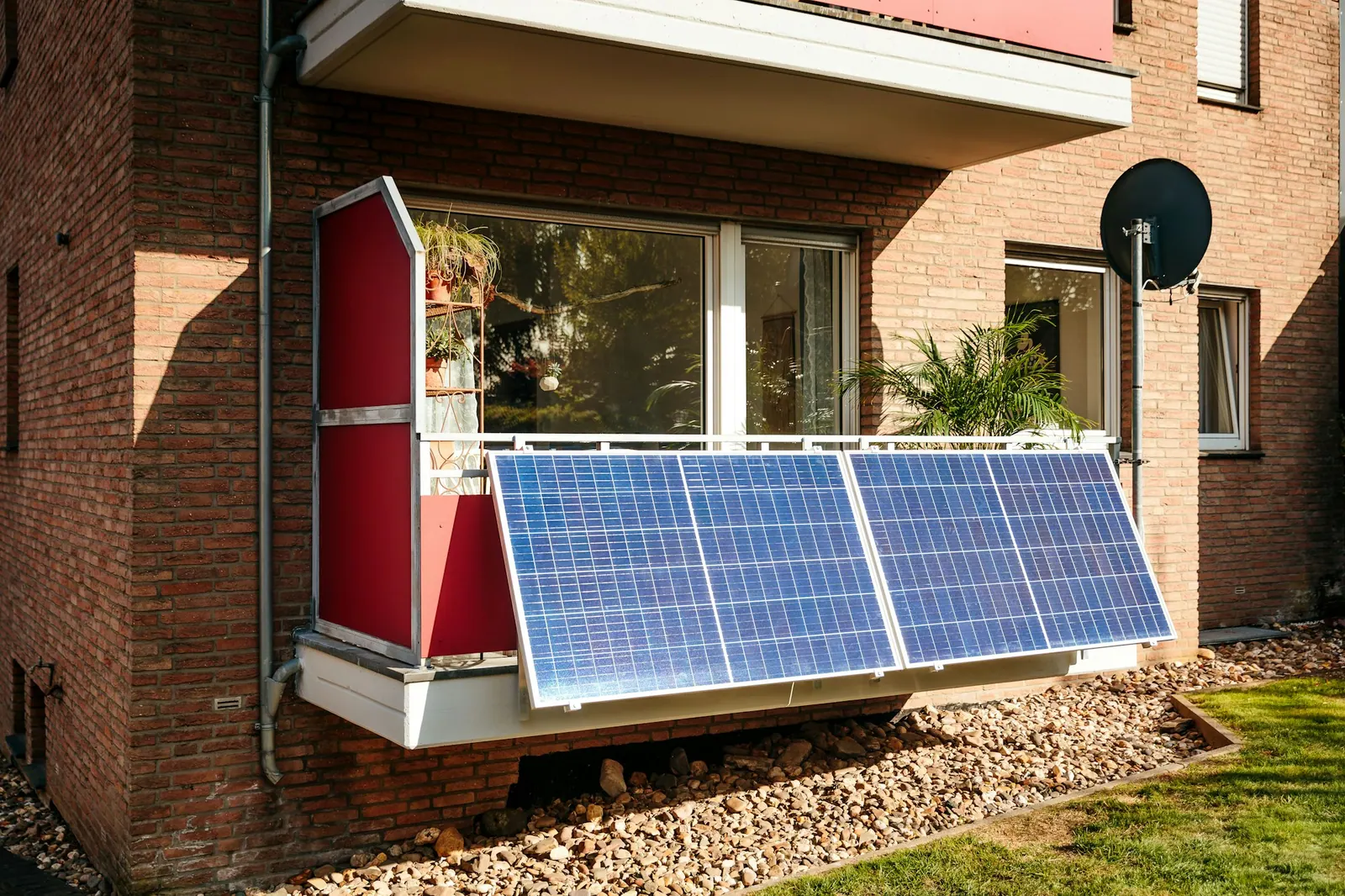
If you rent, live in a flat in Tonbridge town centre, or own a listed cottage, rooftop panels may not be an option. An approved plug-in solar kit on a sunny balcony, wall or garden can still cut bills by around £70 to £110 a year with no installer needed. Only buy kits that meet the UK rules: listed by the Energy Networks Association, no built-in battery, and an inverter of no more than 800 VA. Plug-in panels can’t go on wooden or timber-clad surfaces, and anything fixed to a listed building still needs consent. Our guide to solar for flats and renters covers what landlords and freeholders need to agree to.
Areas we cover in Tonbridge and Malling
We pass quote requests to MCS-certified installers covering the whole borough, including Tonbridge (TN9, TN10, TN11), Hildenborough, Hadlow, East Peckham, West Malling, Kings Hill, East Malling, Leybourne, Larkfield, Snodland, Aylesford, Ditton, Wateringbury, Mereworth, Borough Green, Wrotham, Ightham, Plaxtol and Platt (ME6, ME19, ME20 and TN15). Use the form at the top of this page and we’ll find installers who cover your postcode. Read how our quote service works.
Nearby, see our pages for Sevenoaks, Tunbridge Wells, Maidstone and Medway.
Sources
Figures on this page come from PVGIS 5.3 (EU Joint Research Centre, queried 18 November 2026 for Tonbridge), Ofgem’s price cap for October to December 2026, the government’s 2025/26 solar PV cost data, Which? battery prices (October 2026), MoneySavingExpert export rates (November 2026), HMRC VAT guidance, Tonbridge and Malling Borough Council’s conservation area pages, appraisals and statements, its 2016 Green Belt Study and Climate Change Strategy, the Kent Downs Renewable Energy Position Statement (June 2026) and gov.uk’s Warm Homes: Local Grant allocations. Checked on 24 November 2026.