Solar panels in Gravesend and Gravesham
Solar panels in Gravesend: 2026 costs and payback by roof, monthly output, conservation area and Green Belt rules, local grants and MCS installer quotes.
4 kW
Typical home system (9 panels)
£6,500 to £7,400
Estimated installed cost, panels only
4,200 kWh
Estimated yearly generation, south-facing roof
£655 a year
Estimated bill saving plus export income (£805 with a battery)
Estimates for Gravesham from our calculator assumptions. Your figures depend on your roof, usage and tariff.
Get up to 3 quotes from MCS-certified installers
Free, no obligation, takes about a minute.
Thanks, you're all set
An installer will be in touch, usually within 2 working days.
Covers Gravesend, Northfleet, Meopham and surrounding villages.
Solar panels in Gravesend cost about £6,560 to £7,440 for a typical 4 kW system and save around £660 a year on a south-facing roof, giving a payback of roughly 10 to 11 years. Gravesend gets more sun than most of the UK: the EU’s PVGIS data gives 1,061 kWh per kilowatt of panels each year, about 14% above the UK average. Most homes in Gravesend, Northfleet and Meopham can fit panels without planning permission, but the borough has 23 conservation areas and a lot of Green Belt, so check the rules below before you sign anything.
What solar panels cost in Gravesend
The table below is for a typical three-bedroom home using 2,500 kWh of electricity a year (Ofgem’s medium usage figure), paying the October to December 2026 Ofgem price cap rate of 26.32p per kWh and earning 12p for each unit exported. We assume you use about a quarter of what the panels make without a battery and about half with one.
| System and roof | Installed cost | Yearly output | Yearly benefit | Payback |
|---|---|---|---|---|
| 4 kW, south-facing | £6,560 to £7,440 | about 4,240 kWh | about £660 | 10 to 11 years |
| 4 kW, south-east or south-west | £6,560 to £7,440 | about 3,990 kWh | about £620 | 10.5 to 12 years |
| 4 kW, east or west-facing | £6,560 to £7,440 | about 3,350 kWh | about £520 | 12.5 to 14 years |
| 3 kW, south-facing (terrace) | £4,920 to £5,580 | about 3,180 kWh | about £500 | 10 to 11 years |
| 4 kW south-facing plus 5 kWh battery | £9,060 to £11,440 | about 4,240 kWh | about £810 | 11 to 14 years |
Panel costs come from the Department for Energy Security and Net Zero’s solar PV cost data for 2025/26 (published 28 May 2026), using South East prices of £1,640 to £1,859 per kW for systems up to 4 kW. Battery prices are from Which? and supplier price lists checked in October and November 2026, where a 5 kWh battery fitted alongside new panels starts at around £2,500. There’s 0% VAT on installed panels and batteries in homes until 31 March 2027, after which it rises to 5%.
Two quick decision rules. If your roof faces east or west, panels still pay back, but a battery or a time-of-use tariff matters more because more of your output arrives early or late in the day. If you work from home or have an electric car, you’ll use more of your own power and beat the figures above. Try your own roof and usage in our solar calculator, and see our UK solar panel cost guide and solar battery cost guide for the national picture.
How much electricity solar panels make in Gravesend
PVGIS 5.3, the European Commission’s solar model, gives these monthly figures for a 4 kW south-facing system in Gravesend at a 35 degree tilt, queried on 18 November 2026:
| Month | Output | Month | Output |
|---|---|---|---|
| January | 158 kWh | July | 519 kWh |
| February | 214 kWh | August | 466 kWh |
| March | 354 kWh | September | 403 kWh |
| April | 482 kWh | October | 284 kWh |
| May | 506 kWh | November | 194 kWh |
| June | 517 kWh | December | 146 kWh |
That’s about 3.5 times more in June and July than in December. From April to September a 4 kW system makes 450 to 520 kWh a month, which is more than double what a typical home uses, so the surplus goes to a battery, an electric car or the grid. From November to January it makes 150 to 200 kWh a month, enough to trim your bill but not cover it.
Gravesend’s yield of 1,061 kWh per kW is slightly ahead of nearby Medway (1,050) and Dartford (1,057) on the same PVGIS settings. The Thames estuary helps: north Kent’s riverside towns tend to see more sunshine than the Weald further south.
Gravesend homes and what they mean for solar
Gravesham has one of the highest shares of terraced housing in Kent. Census 2021 figures show 30.0% of Gravesham households live in terraced houses, compared with 23.5% across Kent as a whole. Much of central Gravesend, Northfleet and the streets around Windmill Hill are Victorian and Edwardian terraces, while Meopham, Istead Rise and Higham are dominated by post-war semis and detached houses on larger plots.
How that affects your system:
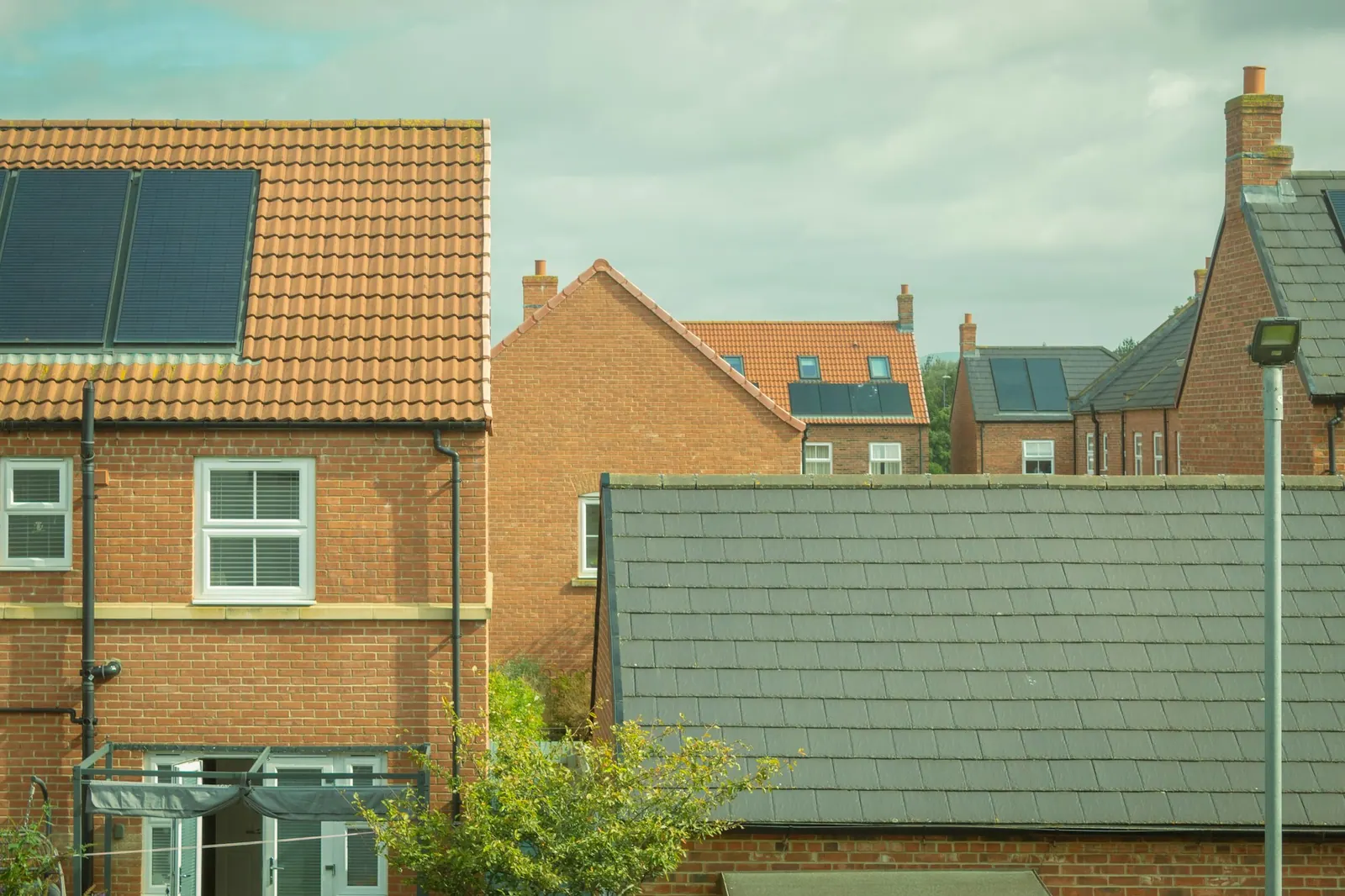
- Terraced roofs are smaller. The rear slope of a two-up two-down terrace often takes six to eight panels, giving roughly 2.6 to 3.5 kW. That’s still worthwhile, as the 3 kW line in the cost table shows, and it often matches a smaller household’s usage well.
- Shading is the main risk. Chimney stacks, rear extensions and the next roof along can shade part of an array in the morning or evening. Ask installers whether they’d use optimisers or microinverters, which stop one shaded panel dragging down the rest.
- Rear slopes are often the better choice. Many terraces face the road one way and the garden the other. If the rear slope faces south, east or west, putting panels there avoids most conservation area questions and keeps the front unchanged.
- Semis and detached houses in the villages usually have room for 10 to 14 panels (4.4 to 6.2 kW), which suits families with higher usage, an electric car or a heat pump.
- Newer homes around Northfleet and the Ebbsfleet area usually have modern concrete tile roofs, which are quick to fit and rarely raise planning issues.
Not sure how many panels you need? Our guide to how many solar panels you need works it out from your bills.
Planning rules for solar panels in Gravesham
Planning decisions in Gravesend, Northfleet and the villages are made by Gravesham Borough Council. Across England, rooftop panels on a house are normally permitted development: on a pitched roof they mustn’t stick out more than 20 cm from the roof surface or rise above the highest part of the roof (chimneys aside), and they should be sited to keep their visual impact down. Most Gravesend homeowners never need to apply. These are the local exceptions to check.
Conservation areas
The council says Gravesham has 23 conservation areas, 11 of them in the rural part of the borough. Its guide for owners and occupiers lists them:
| Urban (Gravesend and Northfleet) | Rural |
|---|---|
| Darnley Road, Harmer Street, High Street/Queen Street, King Street, Milton Place, Overcliffe, Pelham Road/The Avenue, Gravesend Riverside, Upper Windmill Street, Windmill Hill, The Hill (Northfleet), Lansdowne Square (Northfleet) | Cobham, Higham Church Street, Lower Higham, Harvel (Meopham), Hook Green (Meopham), Meopham Green, The Street (Meopham), Chestnut Green (Shorne), Queens Farm (Shorne), Shorne village, Thong (Shorne) |
On solar, Gravesham’s conservation areas guide for owners and occupiers says wall-mounted panels must not be fitted to a wall that fronts a highway, and that equipment on a building should be sited, as far as practicable, to minimise its effect on the building’s appearance and the area. In practice that points you towards rear or side roof slopes in these areas.
Article 4 directions
Gravesham’s Article 4 directions page lists 24 confirmed directions covering its conservation areas, from Windmill Hill North (confirmed August 1998) to Queens Farm, Shorne (January 2011), with a direction for Lower Higham shown as pending. The council’s guidance says these directions can bring minor works under planning control where they front a highway or open space, such as changes to windows and doors, demolishing chimneys, walls and gates, hard surfaces and exterior painting.
Solar panels aren’t named in that summary. If your home is in one of these areas and you want panels on a slope that faces the road, ask the council’s planning team before you commit, or ask your installer to check. A rear slope is usually the simpler route.
Listed buildings
Panels on a listed building, or within its curtilage, need listed building consent as well as any planning permission, wherever it is in the borough. Gravesend’s older streets and villages such as Cobham and Shorne have many listed homes. If yours is one, a ground mount in the garden, panels on an outbuilding, or a plug-in kit (see below) may be easier.
Green Belt
The council says 76.8% of the borough is Green Belt (Gravesham Borough Council, 17 April 2026), which covers most of the land around Meopham, Istead Rise, Higham, Shorne and Cobham. Green Belt status doesn’t remove permitted development rights for panels on an existing house roof. It matters more for large ground-mounted arrays or new outbuildings, which can need permission. If you’re planning panels in a field or paddock, talk to the council first.
Kent Downs Area of Outstanding Natural Beauty
According to the council’s nature conservation pages, the Kent Downs AONB sits on the eastern side of the borough, running from Shorne south to Vigo. As in conservation areas, permitted development doesn’t cover panels on a wall facing a road there. Ordinary pitched-roof panels on a house are still usually permitted development.
Grants and council schemes in Gravesham
Gravesham is better served than some Kent districts for help with solar costs.
| Scheme | Who it’s for | What it offers | Status (24 Nov 2026) |
|---|---|---|---|
| Warm Homes: Local Grant | Homeowners and private renters, household income under £36,000 or on a means-tested benefit, EPC D to G | Free upgrades that can include solar panels | Open, delivered by E.ON for Gravesham |
| ECO4 | Households on qualifying benefits or low incomes in less efficient homes | Funded measures, sometimes including solar | Closes 31 December 2026 |
| Switch Together Kent | Any homeowner | Group-buying discounts on solar, batteries and EV chargers | Runs in rounds across Kent |
| 0% VAT | Everyone | No VAT on installed panels and batteries | Until 31 March 2027 |
Warm Homes: Local Grant. Gravesham is on the government’s list of councils running this scheme. The council’s Warm Homes page says it’s delivered by E.ON’s Green Funding Solutions team, that work is done by TrustMark-registered contractors, and that E.ON will arrange a free EPC if you don’t have one. What you’re offered depends on what your home needs, so solar isn’t guaranteed.
Council homes. Gravesham said on 2 March 2026 that it had won part-funding from the Warm Homes: Social Housing Fund (Wave 3) to upgrade 240 council homes with measures including solar panels, air source heat pumps and insulation. Council tenants don’t apply for this individually.
Switch Together Kent. Formerly Solar Together, this is the group-buying scheme run with all Kent councils and Medway. Gravesham reported on 25 February 2026 that it had delivered 3,920 solar and battery installations and 250 EV chargers across Kent by September 2025. Our Switch Together Kent guide explains how the rounds work and how its prices compare with direct quotes.
For who qualifies for each scheme nationally, read our solar panel grants guide. Be wary of cold callers offering “free solar”: the real schemes are run through the council or named energy companies, and you should never pay a fee to apply.
Choosing a solar installer in Gravesend
Search results for Gravesend mix local firms with installers based in Rochester, Sevenoaks and Essex, so it’s worth checking credentials rather than distance. A good installer for a Gravesham home should:
- be MCS-certified, which you need to claim Smart Export Guarantee payments
- belong to RECC or HIES, which protects your deposit and gives you a complaints route
- offer an insurance-backed workmanship warranty, typically 10 years
- check whether your home is in a conservation area or Article 4 area, and design around it
- explain how they’ll handle shading from chimneys and neighbouring roofs on terraces
- deal with UK Power Networks, the network operator for Kent: G98 notification after fitting for most home systems, or G99 approval in advance for larger systems and some battery set-ups
- give you a written quote that lists panel and inverter models, expected yearly output and any scaffolding costs
Get at least three quotes and compare the cost per kW and the predicted output, not just the headline price. Our guide to choosing a solar installer in Kent explains each accreditation and what happens on installation day.
Should you add a battery?
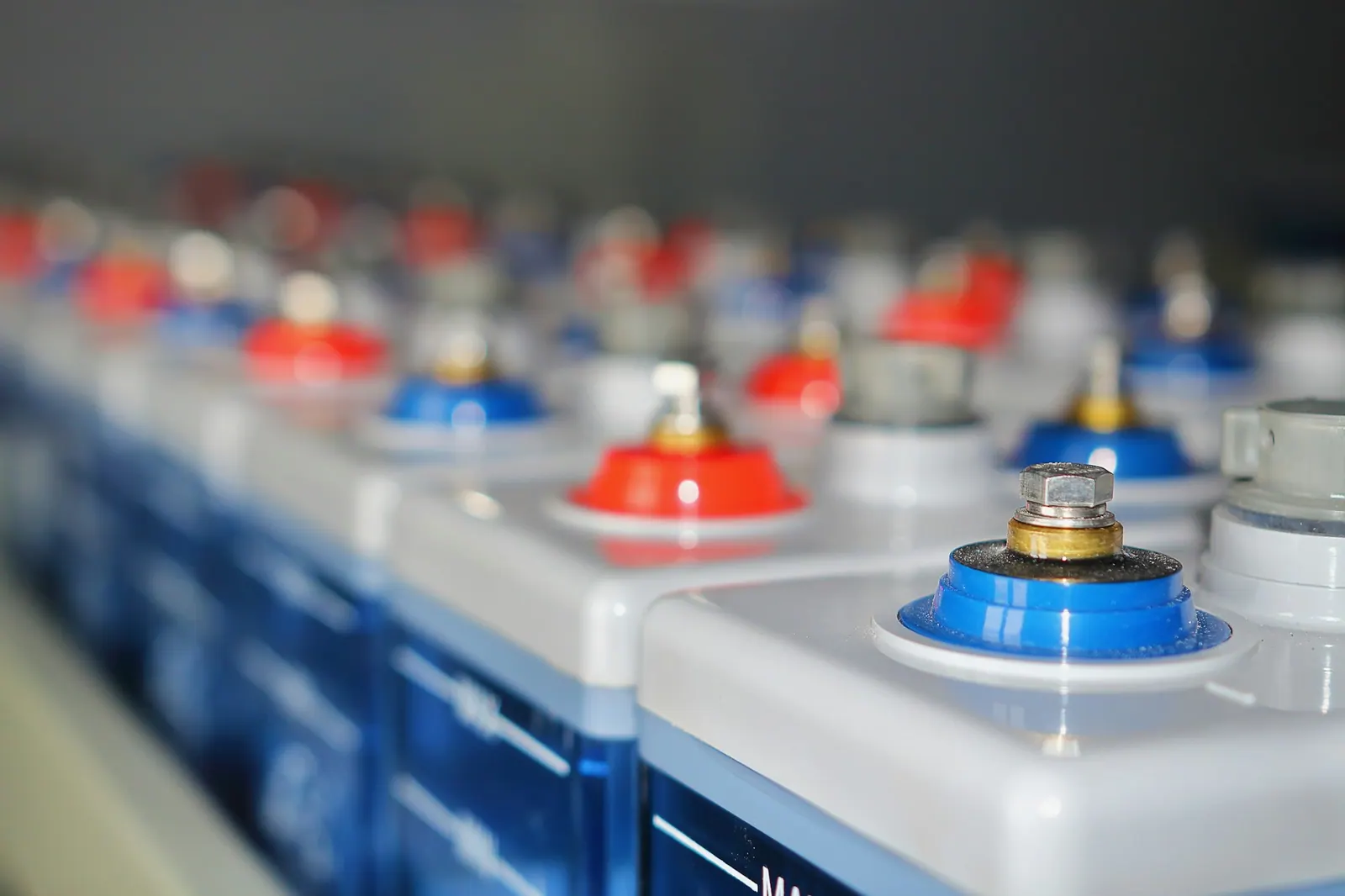
On our figures a 5 kWh battery lifts the yearly benefit of a 4 kW south-facing system from about £660 to about £810, because you use more of your own power at 26.32p instead of exporting it at 12p. That extra £150 a year means a £2,500 to £4,000 battery takes roughly 17 to 27 years to pay for itself on solar savings alone, which is longer than most battery warranties.
Batteries make more sense if you’re on a time-of-use tariff that lets you charge cheaply overnight, if you have an electric car, or if you want backup during power cuts (check the model supports it). If none of those apply, panels on their own usually give the faster payback, and you can add a battery later. See our best solar battery guide for models and prices.
Flats, renters and listed homes
If you rent, live in a flat in central Gravesend, or own a listed house, rooftop panels may not be an option. An approved plug-in solar kit on a balcony, sunny wall or garden can still cut a typical bill by around £70 to £110 a year with no installer. Only buy kits listed as approved by the Energy Networks Association, with an inverter of no more than 800 VA and no built-in battery, as the UK’s 2026 rules require. Our guide to solar for flats and renters covers what landlords and freeholders need to agree to, and listed buildings still need consent for anything fixed to them.
Areas we cover in Gravesham
We pass quote requests to MCS-certified installers covering the whole borough, including:
- Gravesend: town centre, Windmill Hill, Milton, Denton, Riverview Park, Singlewell, Chalk and Painters Ash (DA11, DA12)
- Northfleet: Rosherville, Perry Street, Northfleet Green and the Ebbsfleet area (DA11)
- Meopham and the south: Meopham Green, Hook Green, Harvel, Culverstone Green, Istead Rise, Sole Street and Vigo (DA13)
- East of Gravesend: Higham, Lower Higham, Shorne, Thong, Cobham and Luddesdown
Use the form at the top of this page and we’ll find installers covering your postcode. Read how our quote service works. Nearby, see our pages for Dartford, Medway, Sevenoaks and Tonbridge and Malling.
Sources
Figures on this page come from PVGIS 5.3 (EU Joint Research Centre, queried 18 November 2026), Ofgem’s price cap for October to December 2026 and its typical consumption values, the Department for Energy Security and Net Zero’s 2025/26 solar PV cost data, HMRC VAT guidance, Census 2021 housing data via Kent County Council, and Gravesham Borough Council’s conservation areas guide, Article 4 directions list, nature conservation pages, Warm Homes: Local Grant page and news releases of 25 February, 2 March and 17 April 2026. Checked on 24 November 2026.