Solar panels in Dover, Deal and Sandwich
Solar panels Dover guide for 2026: costs and savings by roof direction, Deal and Sandwich conservation rules, council grants and free MCS installer quotes.
4 kW
Typical home system (9 panels)
£6,500 to £7,400
Estimated installed cost, panels only
4,440 kWh
Estimated yearly generation, south-facing roof
£692 a year
Estimated bill saving plus export income (£837 with a battery)
Estimates for Dover from our calculator assumptions. Your figures depend on your roof, usage and tariff.
Get up to 3 quotes from MCS-certified installers
Free, no obligation, takes about a minute.
Thanks, you're all set
An installer will be in touch, usually within 2 working days.
Covers Dover, Deal, Sandwich, Aylesham and surrounding villages.
Solar panels in Dover cost about £6,500 to £7,400 for a typical 4 kW system and bring in around £700 a year on a south-facing roof, counting both bill savings and export payments. That works out at a payback of roughly 9 to 11 years. East Kent’s coast is one of the sunniest parts of the county: PVGIS data gives Dover 1,122 kWh per kW of panels a year, so the same system makes more here than it would in west Kent. The two things to check before you book are the conservation rules in Deal and Sandwich, and whether you qualify for council funding.
Solar panel costs and savings in Dover
These figures assume a three-bedroom home using 2,500 kWh of electricity a year (Ofgem’s medium typical consumption figure), the Ofgem price cap rate for October to December 2026 of 26.32p per kWh, and an export rate of 12p per kWh. Without a battery, we assume a quarter of what the panels make is used at home and the rest is exported.
| System | Installed cost | Yearly output | Yearly benefit | Payback |
|---|---|---|---|---|
| 4 kW, south-facing | £6,500 to £7,400 | about 4,490 kWh | about £700 | 9 to 11 years |
| 4 kW, south-east or south-west | £6,500 to £7,400 | about 4,220 kWh | about £660 | 10 to 11 years |
| 4 kW, east or west-facing | £6,500 to £7,400 | about 3,550 kWh | about £550 | 12 to 14 years |
| 4 kW, south-facing, plus 5 kWh battery | £9,000 to £11,400 | about 4,490 kWh | about £840 | 11 to 14 years |
Installed costs come from the government’s 2025/26 solar PV cost data for MCS installations (published 28 May 2026), using South East prices of about £1,640 to £1,859 per kW. Battery prices are based on Which? figures from 30 October 2026, where a 5 kWh battery fitted alongside new panels runs from about £2,500 to £4,000. There is currently 0% VAT on installed panels and batteries in homes, until 31 March 2027, when HMRC says it reverts to 5%.
Two decision rules fall out of this table. First, a south-east or south-west roof loses only about 6% of output compared with due south, so it is nearly always worth doing. Second, a battery adds roughly £140 a year at today’s rates, so it only shortens your payback if you can buy it near the bottom of that price range or pair it with a cheap overnight tariff. Our solar battery cost guide goes through the sums.
The 12p export rate is what suppliers such as Octopus, British Gas, OVO and Good Energy were paying their own customers in November 2026, according to MoneySavingExpert. Standalone Smart Export Guarantee tariffs from a supplier you don’t buy from pay much less, typically 2p to 6p, which would cut the yearly benefit on a south-facing system to about £360 to £500. Put your own roof and usage into our solar calculator, or see the national picture in our solar panel cost guide.
How much electricity panels make in Dover
PVGIS 5.3, the EU Joint Research Centre’s solar model, gives these monthly figures for a 4 kW south-facing system in Dover at a 35 degree tilt:
| Month | Output | Month | Output |
|---|---|---|---|
| January | 167 kWh | July | 548 kWh |
| February | 227 kWh | August | 493 kWh |
| March | 375 kWh | September | 426 kWh |
| April | 510 kWh | October | 300 kWh |
| May | 535 kWh | November | 206 kWh |
| June | 547 kWh | December | 154 kWh |
From April to September the system makes more than a typical home uses in daylight, so most of the summer surplus is exported or stored. From November to February it covers a slice of your bill rather than all of it. A battery is most useful in the shoulder months, March, April, September and October, when output is good but your evening use is still high.
How Dover compares with the rest of Kent
| District | PVGIS yield (kWh per kW a year) | 4 kW south-facing output |
|---|---|---|
| Folkestone and Hythe | 1,146 | about 4,580 kWh |
| Dover | 1,122 | about 4,490 kWh |
| Thanet | 1,120 | about 4,480 kWh |
| Canterbury | 1,098 | about 4,390 kWh |
| Maidstone | 1,057 | about 4,230 kWh |
| Sevenoaks | 1,048 | about 4,190 kWh |
East Kent’s coastline gets noticeably more sun than the Weald and the western districts. The gap between Dover and Sevenoaks is about 300 kWh a year on a 4 kW system, worth roughly £40 to £80 depending on how much you use yourself.
Planning permission for solar panels in Dover
Planning questions go to Dover District Council. The council’s own solar advice page says installation is usually permitted development outside a conservation area, as long as panels sit below the roof line. Under the national rules, panels on a pitched roof mustn’t stick out more than 20 cm from the surface or rise above the highest part of the roof, and you must still check Building Regulations and that the roof can take the weight.
Conservation areas in Dover, Deal and Sandwich
Dover District Council says there are 57 conservation areas in the district. Development in them is more tightly controlled, and some work that would normally be permitted development needs a planning application. The council has published appraisals for a dozen of them, including:
- Dover: Dover town centre and Dour Street
- Deal and Walmer: Middle Street, Nelson Street, Deal South Barracks, Victoria Road and Wellington Road, Upper Deal and Great Mongeham
- Sandwich: the historic walled town
- Coast and villages: Kingsdown, St Margaret’s Bay and Waterloo Crescent
Under national permitted development rules, solar panels in any conservation area can’t be fitted to a wall that faces a road. The conservation team can be reached at [email protected].
Article 4 directions in the Dover district
Five areas have Article 4 directions, which take away some permitted development rights so the council can control changes to unlisted homes. The council lists these:
| Area | Direction | Date |
|---|---|---|
| Sandwich | Article 4(2), plus a separate direction for the Salutation | Confirmed 27 January 1998 |
| Middle Street, Deal | Article 4(2) | Confirmed 1 March 2000 |
| Kingsdown | Article 4 | Confirmed 5 September 2016 |
| Dour Street, Dover | Article 4 | Took effect 26 July 2017 |
| Nelson Street, Deal | Article 4 | Confirmed 13 December 2017 |
The council’s Article 4 directions page says these directions can cover alterations to the roof of a house where it faces a road, waterway or public open space. Solar panels aren’t named, so if you live in one of these five areas, treat a front-facing or road-facing array as something that may need permission, and ask the council before you sign a contract. Rear roof slopes that can’t be seen from the street are usually the simpler option.
Listed buildings
Sandwich is the district’s heritage hotspot. Historic England describes it as one of the least altered walled medieval towns in England, with a dense concentration of listed buildings. Panels on a listed building need both planning permission and listed building consent, even when they would be invisible from the street. If your home is listed, panels on an outbuilding, a ground mount in the garden or a plug-in kit may be easier routes.
The Kent Downs and the White Cliffs
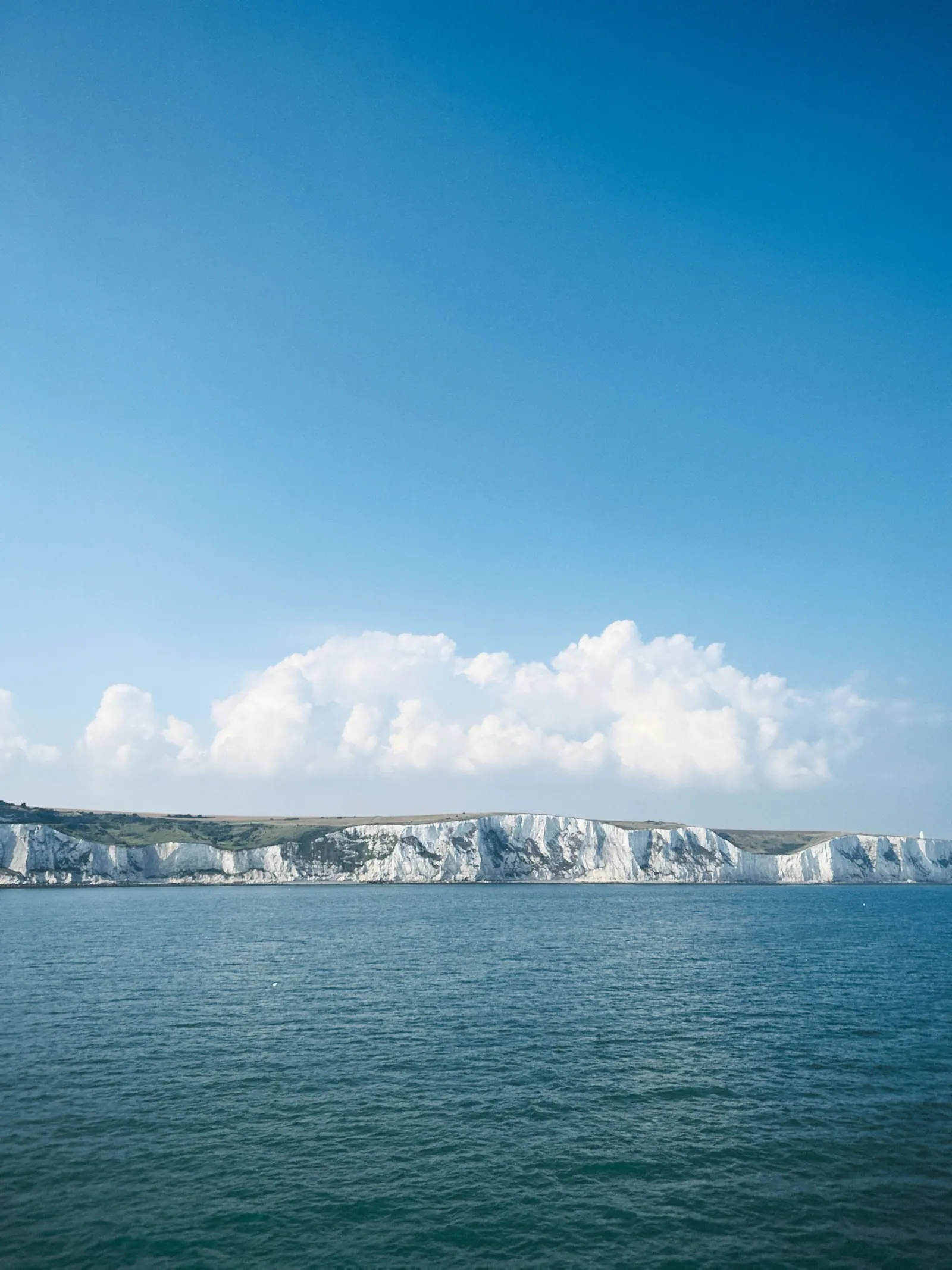
Much of the chalk downland behind Dover, and the White Cliffs either side of the town, sit within the Kent Downs National Landscape. Rooftop panels on a house are still normally permitted development there, and the Kent Downs team’s 2026 renewable energy position statement encourages rooftop solar on existing homes. Flat-roof panels and ground mounts in the Kent Downs face extra checks, so ask your installer to confirm before you plan anything off the main roof.
Dover homes and roofs
The Dover district is a mix of Victorian and Edwardian terraces in Dover and Deal, Georgian and older houses in Sandwich, former mining villages such as Aylesham, and post-war and newer estates on the edges of the towns. According to the ONS, 66.2% of Dover households owned their home in 2021, slightly above the South East figure of 65.7%, while 19.0% rented privately and 13.9% rented from a council or housing association.
That mix shapes what you can fit:
- Terraced streets in Dover and Deal. A rear slope on a Victorian terrace often takes 6 to 8 panels rather than 10. Chimneys and back extensions can shade part of the roof, so ask about optimisers or microinverters on any array that sees shade for part of the day.
- Aylesham and the newer estates. Semi-detached and detached houses with simple concrete tile roofs are the easiest jobs in the district. A 4 kW system usually fits on one slope and rarely needs planning permission.
- Sea-front houses in Deal, Walmer and St Margaret’s. Panels here face more wind and salt spray than inland roofs. MCS installers must check wind loading for every job; ask what fixings and rail coatings they use and whether the panel warranty covers coastal sites.
- Older roofs in Sandwich. Clay peg tiles and old slate break easily when lifted for roof hooks. Ask how the installer will protect them and whether they’ll replace breakages with matching reclaimed tiles.
Dover District Council itself has started fitting panels to its own homes. In a Freedom of Information response, it said 28 of its 4,472 council homes had solar panels, with four installed in 2025/26 and 16 more in the current 2026/27 financial year.
Solar farms in the Dover district
Large solar schemes are a live local issue. Dover District Council’s planning committee approved a 24 MW solar farm with battery storage at Guston on 17 November 2022, on about 29 hectares, with permission for 40 years and enough output for around 7,000 homes according to the council. More recent proposals near Ash have been contested. None of these change what you pay for electricity: farm-scale solar sells into the national grid, and your bill is set by the price cap and your tariff. Rooftop panels on your own house remain the way to cut your own bill.
Grants and help for Dover households
Dover’s position is unusual in Kent, because the council runs its own grant scheme but had paused it when we checked on 24 November 2026.
| Scheme | Status in November 2026 | Who it’s for |
|---|---|---|
| Warm Homes: Local Grant (Dover District Council, with Dartford) | Not taking new applications; existing ones still processed; Year 3 due from 1 April 2027, subject to funding | Homes rated EPC D to G, where the household has income under £36,000, means-tested benefits or lives in a deprived postcode |
| ECO4 Flex, via Dover District Council | Offered until ECO4 closes on 31 December 2026 | Households on certain benefits, on low incomes or in fuel debt |
| Warm Homes Loan Scheme | Open, through participating lenders | Homeowners and private landlords; covers solar panels and batteries |
| 0% VAT | Until 31 March 2027 | Everyone having panels or a battery fitted |
| Switch Together Kent | 2026 round closed | All Kent districts; group-buying with iChoosr |
The council says the Warm Homes: Local Grant can fund solar panels, but insulation is prioritised over renewables, so a poorly insulated home is likely to be offered loft or cavity wall insulation first. Under the Warm Homes Loan Scheme, interest-free or low-interest loans of up to £15,000 for solar and £15,000 for a battery are available with an MCS-certified installer.
For any of the council schemes, contact Dover District Council’s energy team at [email protected] or on 01304 872414. Read our guides to free solar panels, solar panel grants and Solar Together Kent for eligibility in more detail.
Choosing a solar panel installer in Dover
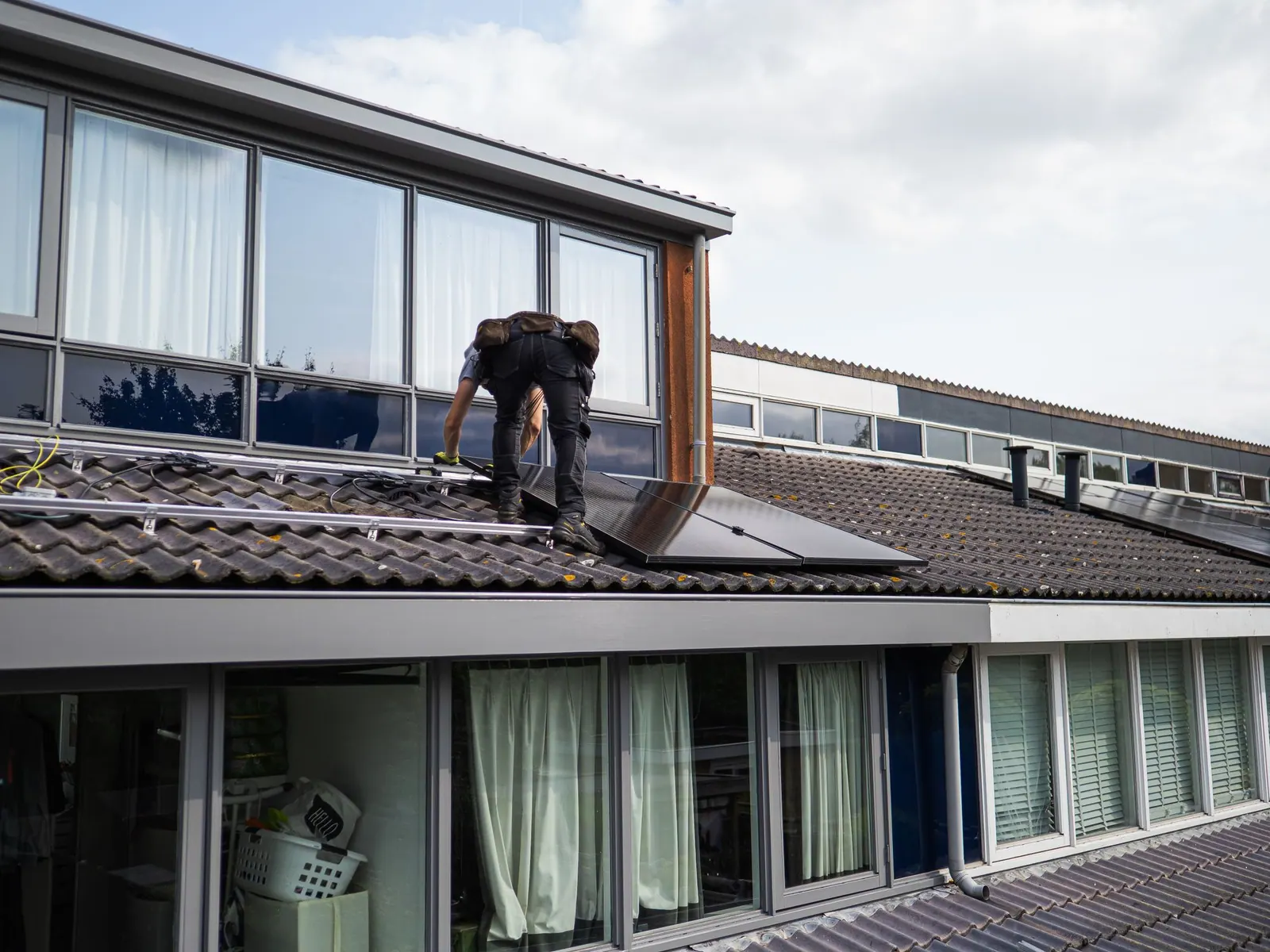
A good installer for a home in the Dover district should:
- be MCS-certified, so you can claim Smart Export Guarantee payments
- belong to RECC or HIES, for deposit protection and a complaints route
- offer an insurance-backed workmanship warranty, so you’re covered if the firm closes
- give a written quote with panel and inverter models, the expected yearly output and the payback assumptions
- check conservation area and Article 4 rules for you if you live in Sandwich, Middle Street or Nelson Street in Deal, Kingsdown or Dour Street
- show experience with coastal installations if you live near the sea
- handle the paperwork with UK Power Networks, the network operator for Kent: a G98 notification after fitting for most home systems, or G99 approval in advance for larger systems and some battery setups
Get at least three quotes, and compare the price per kW and the predicted output rather than the headline total. Our guide to choosing a solar installer in Kent explains each accreditation and what to expect on installation day.
Flats, rentals and listed homes
Around one in five Dover households rents privately, and many town centre homes are flats, so rooftop panels aren’t always an option. An approved plug-in solar kit on a sunny balcony, wall or garden is the alternative. UK rules allow kits that are on the Energy Networks Association list, have no built-in battery and use an inverter of no more than 800 VA. Plug-in panels can’t be fixed to wooden or timber-clad surfaces, and listed buildings still need consent for anything attached to them. See our guide to solar for flats and renters.
Areas we cover in the Dover district
We pass quote requests to MCS-certified installers covering the whole district, including:
- Dover: River, Temple Ewell, Whitfield, Guston, Lydden and St Margaret’s at Cliffe
- Deal and Walmer: Kingsdown, Ringwould, Great Mongeham, Sholden and Upper Deal
- Sandwich: Ash, Eastry, Worth, Staple and Woodnesborough
- Aylesham and the villages: Eythorne, Shepherdswell, Elvington, Nonington and Wingham
Use the form at the top of this page and we’ll find installers covering your postcode. Read how our quote service works. Nearby, see our pages for Thanet, Canterbury and Whitstable and Folkestone and Hythe.
Sources
Figures on this page come from PVGIS 5.3 (EU Joint Research Centre), Ofgem’s price cap for October to December 2026 and its typical consumption values, the government’s 2025/26 solar PV cost data, Which? battery prices (30 October 2026), MoneySavingExpert export rates (9 November 2026), HMRC VAT guidance, Dover District Council’s pages on conservation areas, Article 4 directions, solar PV advice and grant schemes, its FOI response FI17274 and its Guston solar farm press release (25 November 2022), Historic England’s listing for St Clement’s Church, Sandwich, and ONS Census 2021 housing tenure data. Checked on 24 November 2026.