Is plug-in solar legal in the UK?
Is plug in solar legal in the UK? Yes, in Great Britain since 27 August 2026, for ENA-listed kits up to 800 VA and no battery. Rules, limits and DNO steps.
We may earn a commission if you buy through links on this page, at no extra cost to you. As an Amazon Associate we earn from qualifying purchases. It never changes what we recommend.How we make money
The plug-in solar rules at a glance
| Rule | What it means |
|---|---|
| Where | England, Scotland and Wales. Not Northern Ireland yet. |
| Since | 27 August 2026 |
| Approved products only | Must meet the Plug-in Solar Device Interim Product Specification and be on the ENA Type Test Register |
| Maximum output | 800 VA (800 W) from the inverter. The panels can be rated higher. |
| Batteries | Not allowed. Kits with a built-in or add-on battery are excluded. |
| How many | One plug-in solar device per household |
| Connection | Straight into a wall socket. No extension leads or adaptors. |
| Your duty | Notify your electricity network operator when you connect or remove it |
Sources: SI 2026/848, SI 2026/896 and the Plug-in Solar Device Interim Product Specification v2.0 (DESNZ, July 2026). Checked November 2026.
Yes, in Great Britain. Since 27 August 2026 you can legally plug an approved solar kit into a normal wall socket in England, Scotland and Wales, provided the inverter is capped at 800 VA, the kit has no battery and it appears on the ENA Type Test Register. Is plug in solar legal UK-wide? Not quite: Northern Ireland is not covered yet. You can fit it yourself without an electrician, but you are limited to one device per home and you must tell your electricity network operator.
What changed in August 2026
Until this summer, plugging a solar panel into a socket was effectively barred in the UK. The plug standard, BS 1363, did not allow a plug to be used to connect anything that generates electricity, and the electricity safety regulations had no category for small generators connected that way. That is why sellers before August 2026 offered “DIY” kits that needed an electrician, while plug-and-play balcony kits were common in Germany.
Three changes, all in force for 27 August 2026, opened the door:
| Change | What it does | Applies to |
|---|---|---|
| SI 2026/848 | Amends the Plugs and Sockets etc. (Safety) Regulations 1994 and the Electricity Safety, Quality and Continuity Regulations 2002 to create a “plug-in microgenerator”: solar only, 800 W AC maximum, connected by a standard plug, not designed to store energy | England, Scotland, Wales |
| SI 2026/896 | Adds plug-in solar to England’s permitted development rules, so most kits need no planning application | England only |
| Ofgem decision on G98 (11 August 2026) | Updates the network connection rules so householders, not installers, can connect a type-tested plug-in device and notify the network operator | Great Britain |
The technical detail sits in the Plug-in Solar Device Interim Product Specification, version 2.0, published by the Department for Energy Security and Net Zero (DESNZ) in July 2026. “Interim” matters: the government expects to fold the rules into a revised BS 1363 later, so details could change. The government’s launch announcement named Currys, B&Q, Screwfix, Amazon, Argos and Wickes among the retailers lining up to stock compliant kits.
Which plug-in solar kits are legal in the UK
A kit is only on the legal plug-in route if it meets the product specification. That is a stricter test than the “800 W balcony kit” label you will see on overseas marketplaces. We read the specification in full; these are the points that decide it:
- It is listed on the ENA Type Test Register. The manufacturer declares compliance with the specification and the product carries a register reference, such as ECOFL/21128/V1/A3. No reference, no legal plug-in connection.
- The inverter is limited to 800 VA and 3.5 A. The cap applies to the inverter’s AC output, not the panels. Kits often pair 900 W to 1,000 W of panels with an 800 VA inverter so they reach the cap more often on dull days. Above 960 W of panels, the specification says you should consider having your wiring professionally assessed first.
- It has no battery. Plug-in batteries, and solar kits with a battery built in or designed to be added, are outside the specification. The instructions must carry a warning not to use the kit with a battery.
- It comes with a factory-fitted UK plug made to BS 1363 and a cable from the manufacturer. You can’t swap the plug or extend the lead.
- The DC side stays at or below 120 V. The specification sets this limit to cut the risk of electrical arcing, which is one reason some imported kits with long panel strings don’t qualify.
- Outdoor parts are weatherproof to IP55. If the inverter and socket sit outside, the socket must be IP55 rated too.
Our compliance checker takes you through each point for a specific product.
Approved kits we checked
These are the plug-in kits in our product database, with their ENA register references. Prices are from each seller’s UK site, checked on 18 November 2026 (EcoFlow on 24 November 2026).
| Kit | Panels | Inverter | ENA reference | Battery | Price |
|---|---|---|---|---|---|
| Octopus Energy Plug-in Solar (single panel) | 1 x 460 W | 800 VA | OCTOQ/21124/V1/A5 | No | £450 |
| Solarfy Duo 910 | 2 panels, 910 W | 800 VA | SOLAW/21608/V1 | No | £509 to £549 |
| EcoFlow STREAM Plug-in Solar Kit | 2 panels, 1,000 W | 800 VA | ECOFL/21128/V1/A3 | No | £599 |
| Thunder Energy Bolt 920W | 2 panels, 920 W | 800 VA | THUNE/21204/V1 | No | £749.99 |
| UKSOL Plug-In Solar Pro Duo 890W | 2 panels, 890 W | 799 VA | UKSOL/21007/V1/A3 | No | £849 to £899 |
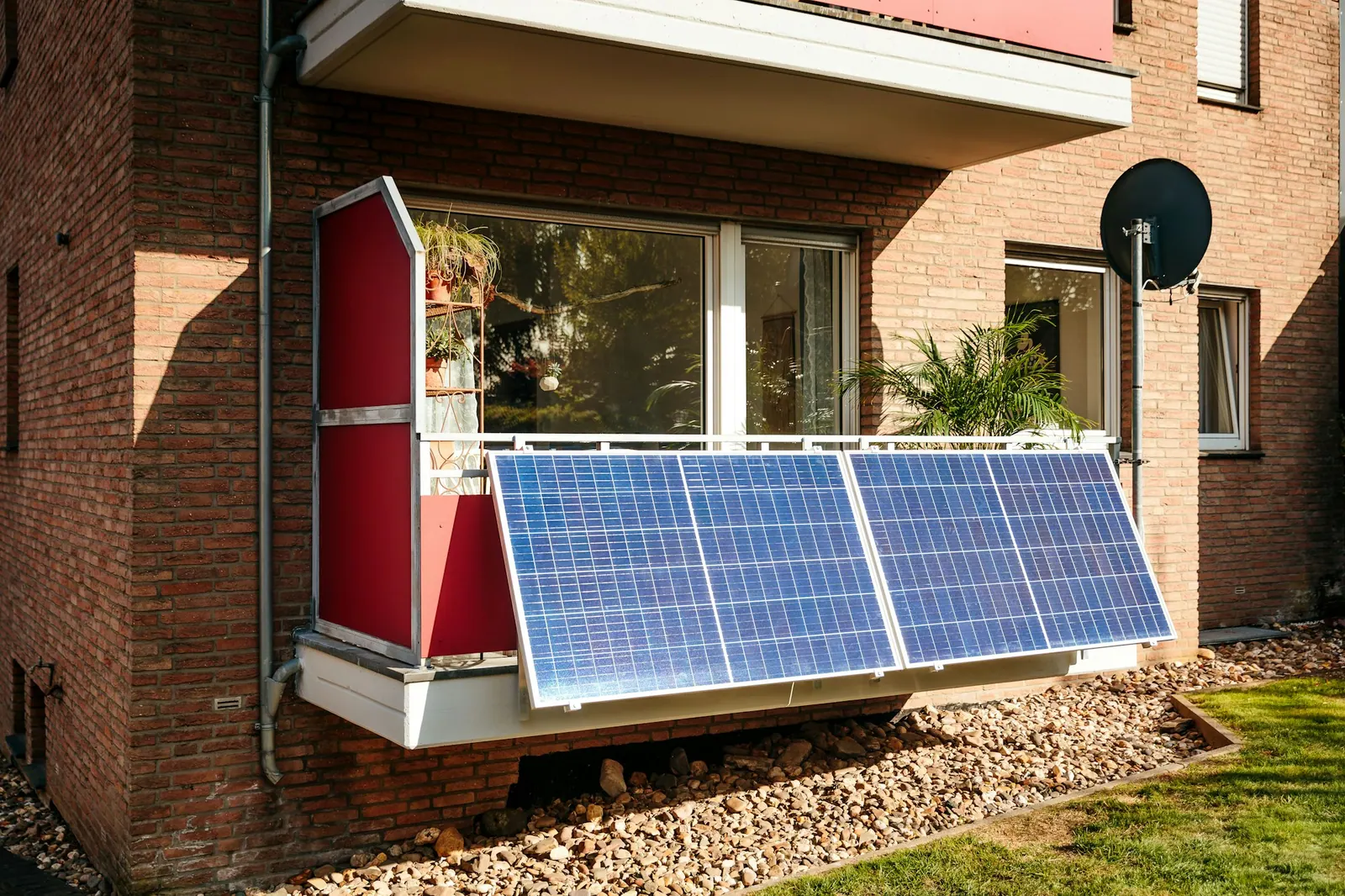
Mounting differs more than the electrics: the EcoFlow kit comes with wall brackets, the Solarfy and UKSOL kits are made for gardens and flat surfaces rather than balconies, and the Thunder kit suits a flat roof or shed. For how they compare on output and warranty, see our best plug-in solar panels roundup or the EcoFlow STREAM review.
What is not legal under the plug-in rules
Plenty of products marketed as balcony solar fall outside the new law. If any of these apply, the kit is not a legal plug-in device, even if it is sold by a UK retailer:
| Product or setup | Allowed on the plug-in route? | Why |
|---|---|---|
| Kit with an inverter over 800 VA | No | Exceeds the SI 2026/848 and specification cap |
| Kit with a built-in or add-on battery | No | Storage is excluded from the plug-in microgenerator definition |
| Kit not on the ENA Type Test Register | No | Not type tested for G98 connection |
| Two plug-in kits in one home | No | G98 allows one per household |
| Kit plugged into an extension lead or adaptor | No | The specification bans extension leads, multi-way, travel and RCD adaptors |
| European kit with a Schuko plug and UK adaptor | No | Needs a factory-fitted BS 1363 plug |
| Plug-in wind turbine or other generator | No | The rules cover solar PV only |
Battery products that sit next to a solar kit, such as larger home storage units, are not banned outright. They just can’t use the plug-in route, so they need to be installed by a qualified electrician and notified in the normal way. Our solar battery costs guide covers that option.
We found no published fine aimed at householders who plug in a non-compliant kit. The real risks are practical: the kit has not been tested against UK wiring, your network operator has no record of it, and your home insurer may refuse a fire claim linked to it.
Your duties once it is plugged in
The rules put a short list of responsibilities on you as the user:
- Notify your network operator. Telling your distribution network operator (DNO) is mandatory when you connect the device and again if you remove it. Ofgem’s G98 decision introduced simplified forms for householders, and the Energy Networks Association is building a consumer notification route on its ENA Connect Direct platform. In Kent, the DNO is UK Power Networks. The kit’s instructions must explain how to notify.
- Keep to one device. One plug-in solar device per household, whatever the number of circuits.
- Plug straight into a fixed wall socket. Use a socket in good condition. No extension leads or adaptors of any kind.
- Check your fuse box first. The specification tells users to check for modern residual current protection, ideally RCBOs on each circuit. If you still have old rewirable fuses, get an electrician to check and, where needed, upgrade the installation before you plug in.
- Fix it so it can come off. Any mounting must be reversible and must not damage the building’s structure, weatherproofing or fire performance.
If you already have rooftop solar
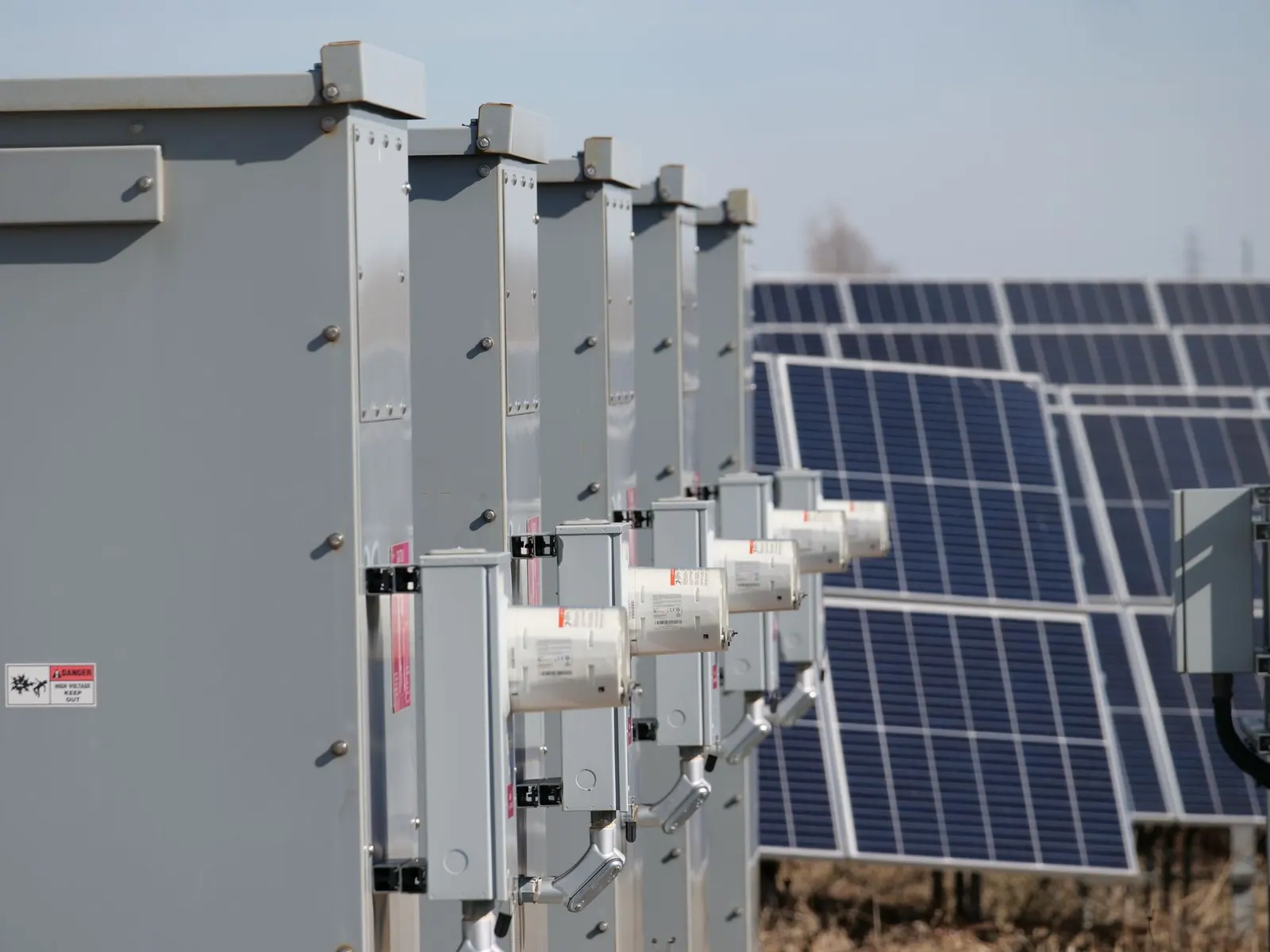
You can run a plug-in kit alongside a hard-wired system, but only if the combined capacity of all generators in your home stays within G98’s limit of 16 A per phase, which is about 3.68 kW on a normal single-phase supply. A typical 4 kWp roof array with a 3.6 kW inverter leaves almost no headroom. Above that limit, the stricter G99 process applies, which means an application to the DNO before connecting. Ask your original installer what inverter rating you have before buying a kit.
Planning permission and permissions from others
In England, SI 2026/896 makes most plug-in solar permitted development, so you don’t need to apply. The main limits are:
- No timber. Kits can’t go on a wooden wall, balcony, fence or gate, or on a timber-clad wall. The government’s reason is to reduce the risk of fire spreading between homes.
- Listed buildings and scheduled monuments are excluded and need consent.
- Conservation areas and World Heritage Sites. Panels can’t go on a wall, balcony or roof enclosure that faces a road.
- Size limits. Panels on a wall or balcony can’t stick out more than 40 cm, or 20 cm where the wall faces a road. Free-standing panels in a garden are limited to 9 m² and have height limits.
The planning change applies in England. In Scotland or Wales, ask your council before fixing panels to the outside of your home. A kit on a garden stand is generally the least likely to need anything.
Planning is only one layer. The electrical rules don’t override a tenancy or a lease, so renters need the landlord’s agreement and leaseholders need the freeholder’s or managing agent’s before fixing anything outside. Buildings with cladding remediation or external wall fire restrictions are a specific red flag, and the specification asks manufacturers to warn about them. Our guide to solar for flats and renters has a template request to send your landlord, and balcony solar panels covers fixing and weight.
Plug-in solar rules across the UK nations
| Nation | Plug-in solar legal? | Planning position |
|---|---|---|
| England | Yes, since 27 August 2026 | Permitted development under SI 2026/896, with the limits above |
| Scotland | Yes, since 27 August 2026 | No specific plug-in rule found; check with your council for wall or balcony fixings |
| Wales | Yes, since 27 August 2026 | No specific plug-in rule found; check with your council for wall or balcony fixings |
| Northern Ireland | No | The safety regulation change does not extend there; a hard-wired system is the legal route |
What a legal kit can realistically save
Legal does not mean big. The government estimates an 800 W kit can supply up to about 20% of an average home’s electricity and save up to £110 a year. Our own figures land in the same range.
We ran the numbers with PVGIS, the EU Joint Research Centre’s solar model, for Maidstone: 1,057 kWh a year per kWp of panels facing south at 35 degrees. Using Ofgem’s price cap unit rate of 26.32p per kWh (1 October to 31 December 2026) and assuming you use 60% of the output at home:
| Where the 800 W kit goes | Output a year (PVGIS) | Saving a year |
|---|---|---|
| Garden stand, south, 35 degrees | About 845 kWh | About £135 |
| South-facing balcony, hung upright | About 610 kWh | About £95 |
| Garden stand, east or west, 35 degrees | About 670 kWh | About £105 |
If you are out at work all day, your self-use share could be closer to a third, which cuts those savings roughly in half. Our article on whether plug-in solar panels are worth it works through payback on each kit.

When a hard-wired system makes more sense
The plug-in route suits flats, renters and anyone without a usable roof. If you own a house with a south, east or west-facing roof, a full system is a different scale: a 4 kWp array in Maidstone makes about 4,200 kWh a year on PVGIS figures, roughly five times a garden plug-in kit. It can have a battery, it qualifies for Smart Export Guarantee tariffs through MCS certification, and fitting is zero-rated for VAT until 31 March 2027 under HMRC rules. Our solar calculator gives a figure for your home, and Kent solar panel installers explains how to compare quotes.
Try the solar calculator
Your estimate
£652 a year
Bill saving plus export income
- System size
- 4 kW (9 panels)
- Yearly generation
- 4,190 kWh
- Installed cost
- £6,500 to £7,400
- Payback
- 10 to 11.3 years
- Bill saving
- £275
- Export income
- £377
Used at home 25%Exported
Open the full calculator to add your roof size, usage and see monthly figures.